



In today’s hyperconnected economy, cybersecurity has become far more than an IT responsibility—it is now a boardroom priority. As organizations embrace artificial intelligence (AI), cloud computing, remote work, and digital transformation, they also face an increasingly sophisticated landscape of cyber threats. From ransomware attacks and phishing scams to AI-powered fraud and data breaches, businesses must rethink how they protect their digital assets.
The rapid pace of technological innovation has created new opportunities for growth, but it has also expanded the attack surface for cybercriminals. Every connected device, cloud application, employee login, and third-party integration presents a potential entry point for malicious actors. As businesses generate and store more data than ever before, safeguarding that information has become essential to maintaining customer trust, operational resilience, and long-term success.
Artificial intelligence is playing a dual role in modern cybersecurity. On one hand, it is empowering security teams with faster threat detection, automated incident response, and predictive analytics. On the other, cybercriminals are also leveraging AI to develop more convincing phishing campaigns, automate attacks, and identify vulnerabilities with greater speed.
Traditional cybersecurity solutions often rely on predefined rules and known attack signatures. While these methods remain valuable, they struggle to detect new and evolving threats. AI-powered cybersecurity platforms overcome this limitation by continuously analyzing network activity, identifying unusual behavior, and detecting anomalies before they escalate into major security incidents.
One of the most significant advantages of AI is its ability to process enormous volumes of security data in real time. Large organizations may generate millions of system events every day—far beyond what human analysts can review manually. AI can rapidly prioritize suspicious activities, allowing cybersecurity professionals to focus on the highest-risk threats while reducing response times.
Phishing remains one of the most common forms of cyberattack, but it has become increasingly sophisticated. Generative AI enables attackers to create highly personalized emails, fake websites, and convincing messages that closely resemble legitimate communications. These attacks often exploit human psychology rather than technical vulnerabilities, making employee awareness and training just as important as advanced security software.
Cloud computing has transformed business operations by providing scalability, flexibility, and cost efficiency. However, cloud adoption also requires organizations to strengthen their security posture. Misconfigured cloud environments, weak authentication practices, and insufficient access controls remain among the leading causes of data exposure. Businesses must adopt a “security by design” approach, ensuring that protection measures are integrated into every stage of digital transformation.
Another growing concern is ransomware. Modern ransomware attacks no longer simply encrypt files—they often involve data theft, operational disruption, and extortion. Cybercriminal groups increasingly target critical industries such as healthcare, finance, manufacturing, and government services, where downtime can have severe financial and reputational consequences.
To combat these threats, organizations are moving toward a Zero Trust security model. Unlike traditional perimeter-based security, Zero Trust assumes that no user or device should be trusted automatically, regardless of whether it operates inside or outside the corporate network. Every access request must be verified through continuous authentication, identity management, and device validation. This approach significantly reduces the risk of unauthorized access and lateral movement within networks.
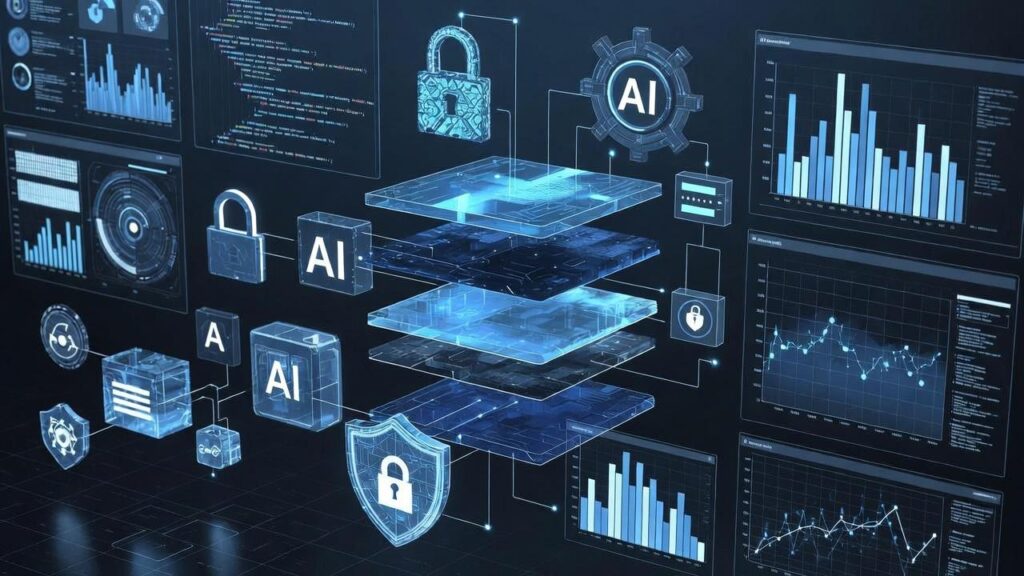
Identity has become the new security perimeter. Multi-factor authentication (MFA), biometric verification, and passwordless authentication technologies are becoming standard practices for organizations seeking to strengthen access control. These solutions help prevent unauthorized access even if login credentials are compromised.
Cybersecurity is also becoming a strategic business differentiator. Customers increasingly expect companies to protect their personal information, comply with data privacy regulations, and demonstrate responsible digital governance. A strong cybersecurity reputation can enhance customer confidence, strengthen partnerships, and create a competitive advantage in an increasingly digital marketplace.
The UAE has made cybersecurity a national priority through investments in digital infrastructure, smart government initiatives, and advanced regulatory frameworks. As the country accelerates its digital economy, organizations across sectors are investing heavily in security technologies, cyber resilience, and workforce development to address emerging risks.
However, technology alone cannot solve cybersecurity challenges. Human expertise remains indispensable. Regular employee training, incident response planning, vulnerability assessments, and executive-level governance all play vital roles in building a resilient cybersecurity culture. Every employee, regardless of role, contributes to the organization’s overall security posture.
Looking ahead, cybersecurity will continue evolving alongside emerging technologies such as quantum computing, autonomous systems, and advanced AI. Organizations must remain agile, continuously updating their security strategies to address new threats while embracing innovation responsibly.
Ultimately, cybersecurity is about more than preventing attacks—it is about enabling digital confidence. Businesses that prioritize security can innovate more boldly, build stronger customer relationships, and navigate an increasingly complex digital landscape with greater resilience.
In the AI era, trust has become one of the world’s most valuable business assets. Protecting that trust requires continuous investment, strategic leadership, and a proactive approach to cybersecurity. For organizations across the UAE and beyond, the future belongs to those that make digital security an integral part of their business strategy rather than an afterthought.